

Published July 10, 2026 | Category: Industry News | Source: WINDA Technology
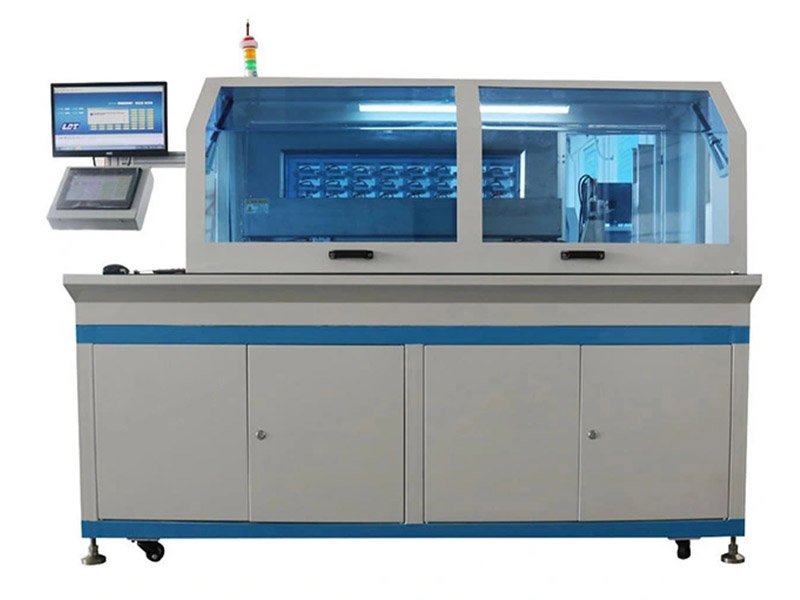
WINDA IC Card Personalization Machine -- Advanced smart card data writing system
As we move deeper into 2026, the global smart card personalization market is experiencing an unprecedented transformation. Driven by the explosive adoption of contactless payments, national ID programs across Asia-Pacific and Africa, and the accelerating deployment of IoT-enabled secure credentials, the demand for high-throughput, precision card personalization equipment has reached historic highs. According to recent industry analyses, the global smart card personalization equipment market is projected to exceed USD 4.2 billion by 2027, with a compound annual growth rate (CAGR) of 8.7% from 2024 to 2027.
At the forefront of this technological revolution stands the WINDA IC Card Personalization Machine -- a sophisticated data writing and encoding platform that represents the cutting edge of modern card manufacturing technology. This comprehensive analysis explores how machines like WINDA's flagship model are enabling enterprises, government agencies, and financial institutions worldwide to meet the growing demand for personalized smart cards with unprecedented efficiency and reliability.
IC card personalization is a multi-step manufacturing process that transforms blank or semi-finished integrated circuit cards into fully programmed, individually customized credentials ready for end-user deployment. The process encompasses several critical operations:
The WINDA IC Card Personalization Machine incorporates several advanced engineering features that distinguish it from conventional equipment in today's competitive marketplace:
Banks and fintech companies continue to be the largest consumers of personalization services. With EMV chip migration now complete in most developed markets, the focus has shifted to instant issuance at branches, mobile-first onboarding flows requiring pre-personalized credentials, and next-generation payment cards featuring biometric sensors and dynamic display elements. The WINDA machine's flexible architecture supports these evolving requirements through modular encoding heads and software-upgradable firmware.
Governments across Southeast Asia, Africa, and Latin America are rolling out ambitious multi-application national ID programs that combine e-passports, driver licenses, health insurance cards, and social security tokens onto a single credential. These programs require massive-scale personalization infrastructure capable of handling millions of cards annually while maintaining strict chain-of-custody and audit trail requirements. Modern personalization machines like those from WINDA integrate directly with government-grade key management systems (KMS) and support post-issuance lifecycle management protocols.
The transition from physical SIM cards to eSIM profiles has not eliminated the need for traditional SIM personalization -- rather, it has shifted the use case toward enterprise M2M/IoT deployments where programmable SIMs with custom operator profiles remain essential. Furthermore, the emergence of iSIM (integrated SIM) technology in consumer devices creates new opportunities for IC personalization at the semiconductor packaging level, a domain where precision encoding equipment plays a critical role.
Corporate access control systems increasingly rely on smart credentials that store biometric templates, digital certificates, and role-based authorization rules directly on the card chip. In-house personalization capability allows organizations to issue new employee badges within minutes rather than waiting days for outsourced fulfillment. This trend accelerated significantly during the post-pandemic workforce restructuring period and shows no signs of reversing as hybrid work models become permanent.
With NIST finalizing post-quantum cryptography (PQC) standards, personalization equipment must evolve to handle larger key sizes (up to 4 KB per certificate) and new algorithm families like CRYSTALS-Kyber and Dilithium. Forward-compatible machines being deployed in 2026 will define the installed base for the coming decade.
Environmental regulations in the EU (ESG reporting mandates) and corporate sustainability commitments are driving demand for recycled-PVC cards and bio-based substrates. Personalization machines must adapt thermal print parameters and lamination temperatures for these new materials without compromising durability or read reliability.
Machine vision and deep learning models are being embedded into personalization lines to perform real-time defect detection, OCR verification of printed data, and predictive maintenance of encoding heads. This reduces manual QA labor by up to 70% while improving first-pass yield rates above 99.5%.
When evaluating IC card personalization equipment for production deployments, procurement teams should consider multiple dimensions beyond raw throughput numbers. WINDA Technology's approach emphasizes several differentiating factors:
Geographic distribution of personalization demand continues to shift. While North America and Western Europe maintain steady replacement-cycle purchasing patterns, the highest volume growth is occurring in:
Organizations planning to invest in IC card personalization infrastructure should follow a structured deployment methodology:
As we look beyond 2026, the convergence of several technological vectors promises to reshape the personalization landscape further. Quantum-resistant algorithms, blockchain-based verifiable credentials, and advanced biometric-on-card technologies will require next-generation encoding platforms. Organizations that invest in adaptable, software-defined personalization infrastructure today -- exemplified by solutions like the WINDA IC Card Personalization Machine -- position themselves to capitalize on these innovations without wholesale equipment replacement.
For businesses seeking reliable, scalable, and future-proof card personalization capabilities, partnering with established manufacturers who combine proven hardware engineering with responsive customer support remains the optimal strategic choice. The 2026 market offers abundant options, but only a select few vendors demonstrate the technical depth, global reach, and commitment to continuous innovation required to serve as long-term partners in the identity value chain.
About WINDA Technology: WINDA specializes in the design, manufacture, and global distribution of smart card personalization equipment, RFID production machinery, and automated card processing solutions. With over a decade of experience serving financial institutions, government agencies, and industrial enterprises worldwide, WINDA delivers turnkey personalization systems backed by comprehensive after-sales support and customizable software ecosystems.
Contact Information: Email: [email protected] | WhatsApp: +86 186 2085 0485
Website: www.wdsort.com | Explore our full catalog of IC card personalization and RFID production equipment.
Sorter
Wechat QR code
wechat number:Copyright © 2022-2023 Winda, inc. All rights reserved