

As parcel volumes keep climbing and labor pools keep shrinking, 2026 is shaping up to be the year when high-throughput circular cross-belt sorter technology moves from a premium differentiator to a baseline expectation for serious fulfillment operations. At the center of this shift is a machine built around a closed-loop circular track and independently driven belt trolleys, capable of sustaining theoretical throughput of 40,000 pieces per hour while holding sorting accuracy above 99.99 percent. This article explains what the technology is, why it matters in 2026, and where the market is heading.
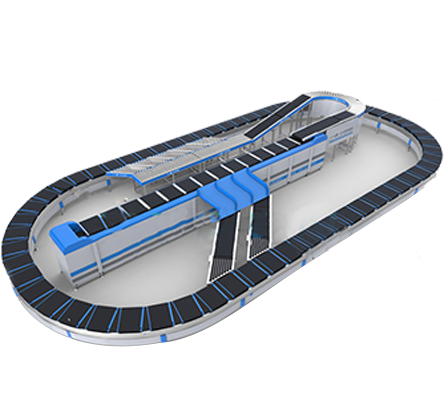
Figure 1: Circular Cross-belt Sorter - system overview
A circular cross-belt sorter is a closed-loop high-speed sortation system in which each carrier, or trolley, carries its own short belt section. Parcels are loaded onto trolleys at one or more induction points and ride the loop until the control system triggers the trolley's belt to discharge the parcel sideways into the correct destination chute. Because every trolley is driven independently, the machine can release items with millimeter-level timing precision, which makes ultra-high accuracy possible even at aggressive line speeds.
Unlike linear lines that grow with facility length, the circular layout folds the sortation path back on itself, keeping the footprint compact while preserving a long effective track. This makes it a strong fit for brownfield sites and urban distribution centers where floor space is at a premium.
The WINDA circular cross-belt model combines a 40,000 pcs/h theoretical ceiling with a verified actual throughput of 21,600 pcs/h under real mixed-SKU operation. It integrates directly with dimensioning, weighing, and scanning (DWS) systems so every parcel is measured, weighed, and identified before sorting, with no manual barcode handling.
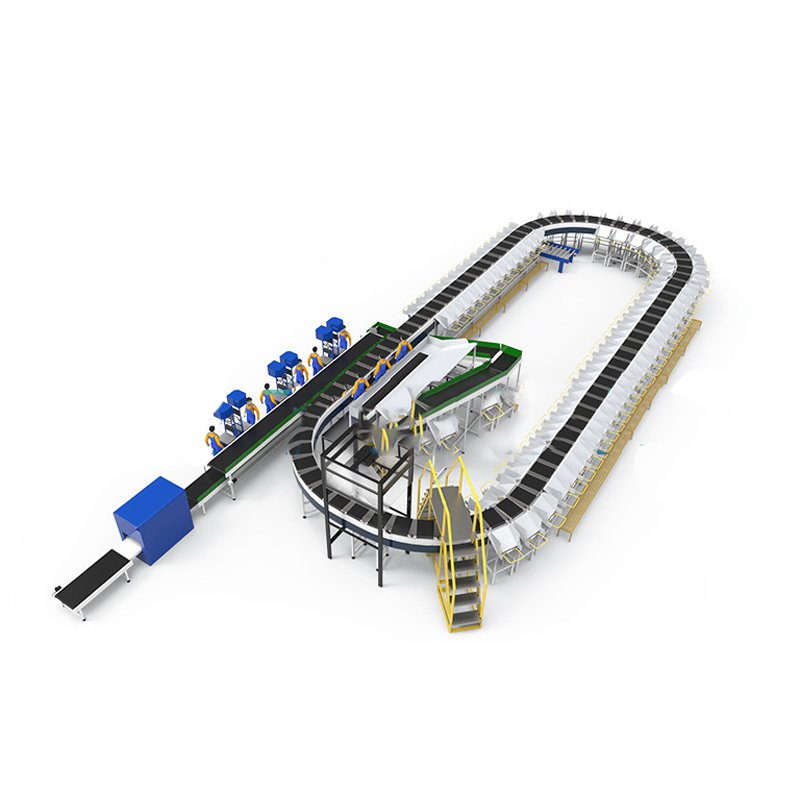
Figure 2: Cross-belt trolley detail view
| Theoretical Throughput | 40,000 pcs/hour |
| Actual Throughput (verified) | 21,600 pcs/hour |
| Sorting Accuracy | > 99.99% |
| Cargo Loss Rate | < 0.01% |
| Noise Level | < 65 dB (indoor compliant) |
| Infeed Design | 12-person collaborative supply across dual zones |
| Grid Width (Large Item) | Prioritized > 750 mm expansion |
| Trolley Drive | Independent belt control per trolley |
| DWS Integration | QR scanning, weighing, volume measurement |
| Custom Options | Flexible grid and lane configurations |
| Certifications | CE / ISO certified |
1. Independent per-trolley belt control. Each trolley runs its own belt drive, so discharge timing is decoupled from track speed. This is the core enabler of sub-0.01 percent cargo loss and consistent accuracy at high rates.
2. Closed-loop circular track. The looped geometry delivers a long effective sortation path inside a compact footprint, an advantage as operators optimize existing buildings rather than building new ones.
3. Dual-zone collaborative infeed. A 12-person collaborative supply design across two induction zones keeps the loop continuously fed, smoothing the gap between human induction and machine cadence.
4. Native DWS integration. Automatic QR scanning, weighing, and volumetric measurement run inline, eliminating manual barcode touches and feeding clean data straight into warehouse and transport management systems.
5. Large-item grid expansion. A prioritized grid width expansion above 750 mm supports oversized parcels without compromising the throughput of standard items.
6. Quiet, indoor-friendly operation. Noise stays below 65 dB, meeting strict indoor environmental requirements and improving working conditions on the floor.
7. Gentle handling. Standardized low-impact discharge protects fragile and high-value goods, which matters for electronics, pharmaceuticals, and cosmetics.
E-commerce fulfillment. High-volume parcel sorting with inline DWS delivers 99.99 percent accuracy and real-time WMS or TMS synchronization, the backbone of same-day and next-day promises.
Multi-category retail. Footwear, books, electronics, and pharmaceuticals move through the same line with gentle handling, reducing damage claims across diverse SKU profiles.
Pharmaceutical and healthcare. Temperature-sensitive and regulated products benefit from full traceability and a cargo loss rate below 0.01 percent.
Retail chain distribution. Precise sortation to individual stores or regional DCs supports omni-channel replenishment and store-level accuracy.
Cross-docking hubs. Rapid transshipment with minimal storage time enables tight delivery commitments and lowers inventory carrying cost.
Third-party logistics (3PL). Flexible grid and lane configurations absorb varying client requirements without re-engineering the core line.
Trend 1: Accuracy becomes a hard requirement, not a nice-to-have. As carriers tighten chargeable-weight and address-correction penalties, 99.99 percent accuracy with inline DWS directly protects margin.
Trend 2: Labor shortage accelerates automation. With induction the only remaining labor-heavy step, operators increasingly favor systems like circular cross-belt lines that maximize throughput per operator.
Trend 3: Software-defined sortation. The value is shifting from steel to logic. Real-time WMS or TMS sync, dynamic chute assignment, and analytics dashboards are now part of the buying decision.
Trend 4: Resilience and footprint efficiency. Circular layouts let operators add capacity inside existing walls, avoiding costly expansion and single-point failures.
Trend 5: Sustainability pressure. Lower noise, gentler handling, and fewer mis-sorts reduce rework, returns, and energy waste, supporting corporate ESG goals.
Trend 6: Integrated DWS as standard. Standalone scanners are giving way to fully integrated dimensioning, weighing, and scanning, making the sorter the single source of truth for parcel data.
For a mid-size hub, the combined effect of higher actual throughput, lower cargo loss, and reduced manual handling shortens payback while freeing floor labor for higher-value tasks. The verified 21,600 pcs/h actual rate lets capacity planning run on real numbers, not nameplate figures.
Q: Is the 40,000 pcs/h figure realistic for daily operation?
A: 40,000 pcs/h is the theoretical ceiling. Verified actual throughput under mixed-SKU conditions is 21,600 pcs/h, the number operators should use for planning.
Q: Can the system handle large or irregular parcels?
A: Yes. The grid supports prioritized expansion above 750 mm for oversized items while standard items keep full throughput.
Q: How does it connect to existing software?
A: Native DWS integration feeds dimension, weight, and scan data into WMS or TMS in real time, enabling automated sort decisions without manual intervention.
In 2026, the circular cross-belt sorter is no longer an exotic premium line. It is becoming the reference architecture for operations that need verified high throughput, 99.99 percent accuracy, and gentle handling inside a compact footprint. For fulfillment, retail, pharmaceutical, and 3PL operators, independent trolley control, inline DWS, and flexible configuration make it a pragmatic foundation for the next decade of sortation.
If you are evaluating a high-speed sortation upgrade, request a capacity simulation based on your real SKU mix and peak profile. A properly configured circular cross-belt line turns throughput, accuracy, and labor constraints into a measurable competitive advantage.
Sorter
Wechat QR code
wechat number:Copyright © 2022-2023 Winda, inc. All rights reserved