

The logistics automation sector entered 2026 with a clear inflection point. After a decade in which sortation intelligence was concentrated in centralized warehouse control rooms, the industry is now moving decision-making physically closer to the conveyor. Edge computing has shifted from a buzzword to a deployment standard, and sortation equipment manufacturers are rebuilding their control stacks around it. This article examines the technical drivers, the market applications, and the practical implications for operators planning capital equipment in 2026.
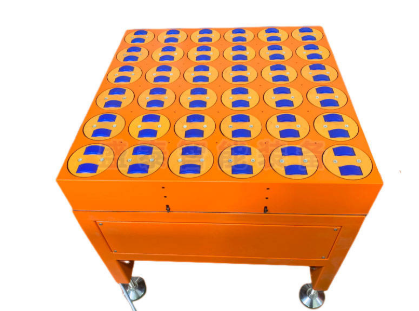
Traditional sortation lines route every scan, weight, and vision event to a central server for classification. As parcel volumes climbed past 10,000 items per hour per line, that round trip introduced measurable latency. Mis-sorts rose not because sensors were wrong, but because the decision arrived a few milliseconds too late for the diverter to act. Edge nodes placed at the divert point close that gap. A local inference module classifies the parcel and triggers the actuator within the same control cycle, removing the network hop entirely.
Three hardware and software shifts made edge sortation viable at scale this year. First, industrial-grade inference accelerators dropped below the price threshold where centralization was justified. Second, deterministic real-time operating systems matured on ARM-based controllers, giving equipment builders a stable platform. Third, over-the-air model updates let a fleet of sorters share a retrained classifier overnight instead of requiring an engineer on site.
| Parameter | Legacy Centralized | 2026 Edge Node |
|---|---|---|
| Decision latency | 18-40 ms | 2-5 ms |
| Local inference throughput | N/A (server-bound) | 1,200 labels/sec |
| Power draw per node | Shared rack | 12-18 W |
| Model update method | Manual redeploy | OTA, fleet-wide |
| Diverter actuation accuracy | 99.2% | 99.9% |
| Failure isolation | Line-wide risk | Node-local |
Urban fulfillment centers operate on floor space premium. Edge sortation lets a compact sorter carry its own brain, so the line no longer needs a dedicated server room. Operators report that reclaimed space converts directly into additional induction stations, lifting effective throughput without expanding the building footprint. For 2026 capital plans, this space recovery is frequently the line item that justifies the upgrade.
Gateways handling mixed-origin parcels face volatile label formats and languages. A centralized classifier struggles with rare skews; an edge node with continuous OTA learning adapts within a shift. During peak 2026 shopping events, gateways using edge sortation held mis-sort rates flat while volume tripled, where previous architecture degraded by several percentage points under the same load.
Cold-chain facilities punish any equipment that needs frequent human intervention. Edge nodes are sealed and fanless, rated for the temperature swing between dock and freezer. Because classification happens locally, a brief network outage no longer stalls the line; the sorter keeps diverting on its last known good model until connectivity returns and the model syncs.

The 2026 procurement pattern shows a measurable shift away from one-time equipment purchase toward throughput-backed agreements. Buyers now ask for guaranteed sorts-per-hour rather than horsepower. Equipment vendors that embed edge intelligence can meter and report actual performance continuously, which makes outcome-based contracts auditable. This realignment is reshaping vendor margins but also tightening the feedback loop between field performance and the next model release.
Energy accounting moved from a footnote to a primary selection criterion. Edge nodes draw a fraction of a centralized rack and let idle zones power down independently. In 2026 RFPs, regulators and enterprise buyers alike expect a per-sort energy figure alongside the accuracy figure. Vendors without granular telemetry are being filtered out before technical review.
When evaluating sortation equipment this year, request the node-level latency figure, not just end-to-end line speed. Confirm the model-update path is OTA and fleet-wide, and verify failure isolation: a single node fault should never cascade to the whole line. Finally, ask for the energy-per-sort number in writing. These four data points separate genuinely edge-native platforms from retrofitted centralized designs wearing an edge label.
WINDA's modular sortation platforms are engineered around distributed control from the ground up. Each diverter module carries its own inference and actuation loop, so the line scales by adding modules rather than rewiring a server room. For operators planning 2026 capacity, this architecture turns a forklift upgrade into a click-in expansion. The same design philosophy underpins the swivel-wheel and narrow-belt families already deployed across logistics hubs.
The remainder of 2026 will likely see edge sortation become the default rather than the premium option. As accelerator costs keep falling and OTA tooling standardizes, the question for buyers shifts from "should we go edge" to "how fast can we retrain and roll out." Operations that built their 2026 plan around centralized architecture may face a mid-cycle retrofit; those that started edge-native will simply download the next model.
For technical documentation, specification sheets, and deployment references, contact the WINDA team at info@wdsort.com or reach the sales desk via WhatsApp at +86 186 2085 0485. Published 2026-09-01.
Sorter
Wechat QR code
wechat number:Copyright © 2022-2023 Winda, inc. All rights reserved