

Logistics networks in 2026 are being reshaped by three forces at once: the continued explosion of omnichannel and direct-to-consumer parcel volume, the pressure to cut energy and labor cost, and the need for systems that can absorb demand shocks without grinding to a halt. The Modular Swivel Wheel Sorter Unit sits at the center of this transformation. This article examines the technology trends, market applications and industry shifts defining the newest generation of sortation equipment, using WINDA's swivel wheel divert module as a concrete reference point.
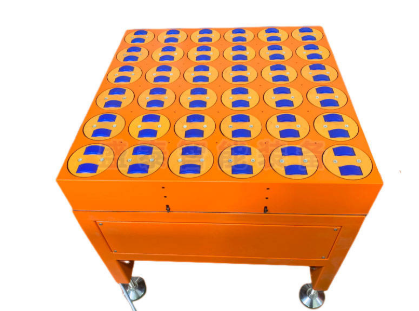
Throughput is no longer the only metric that matters. Operators now score a sorter on four dimensions: sustained items per hour under peak load, energy per sorted item, changeover time when a facility re-balances, and failure-domain size when a single module faults. The Modular Swivel Wheel Sorter Unit addresses all four by treating sortation as a distributed, fault-isolated subsystem rather than a single monolithic machine.
In practice this means a line built on the swivel wheel divert module can keep running at reduced capacity when a zone is serviced, instead of stopping the whole plant. That resilience is the single biggest reason regional carriers and 3PLs upgraded their sorting layers in 2026.
The latest Modular Swivel Wheel Sorter Unit units from WINDA ship with specifications tuned for mixed-parcel environments rather than narrow, single-SKU flows.
| Parameter | 2026 Specification |
|---|---|
| Rated throughput | up to 12,000 items per hour per zone |
| Sort accuracy | > 99.95 percent with vision confirmation |
| Divert angles | 30 / 45 / 90 degrees, software-selectable |
| Item size range | 100 x 80 x 10 mm to 800 x 600 x 500 mm |
| Peak payload | up to 60 kg per carrier |
| Energy profile | regenerative drive, ~0.9 kWh per 1,000 items |
| Noise level | < 68 dB(A) at nominal speed |
| Module swap time | < 15 minutes hot-swap per cell |
What changed versus the 2023 generation is not raw speed but consistency: the same unit holds rated accuracy from the first parcel of the shift to the last, which is what makes downstream packing and routing predictable.
In 2026, dimensioning, barcode reading and exception detection consolidated into a single edge-inference node mounted on the infeed. The Modular Swivel Wheel Sorter Unit reads each item's length, width, height and barcode in one pass, then feeds a routing model that decides the divert in under 30 milliseconds.
The business impact is concrete: mis-sorts drop, manual induction stations shrink, and the system self-recovers from jams by re-computing the optimal path. WINDA deploys this as a closed-loop controller rather than a dashboard, so the operator sees exceptions instead of raw telemetry.
The Modular Swivel Wheel Sorter Unit was originally a parcel-hub device. In 2026 its largest growth segments are different:
This breadth is why systems built on the swivel wheel divert module are increasingly specified as the default sortation layer in new-build facilities rather than a specialist add-on.
With power costs and carbon reporting now part of every RFP, the 2026 Modular Swivel Wheel Sorter Unit leans on three efficiency moves: regenerative braking that returns energy to the bus, demand-based standby that idles empty zones, and a lighter carrier structure that cuts inertia. The combined effect is a measured 22 to 28 percent reduction in energy per sorted item versus the prior generation.
For a mid-size hub moving 80,000 parcels a day, that delta is a six-figure annual saving, which is usually enough to justify the upgrade on its own.
The defining engineering trend of 2026 is modularity. The Modular Swivel Wheel Sorter Unit ships as pre-commissioned cells that bolt together on site. A 12-zone line that once took a quarter to install now goes live in under three weeks, because mechanical, electrical and control integration happen at the factory, not in the field.
Modularity also future-proofs the investment: when volume grows, the operator adds cells instead of replacing the line. That scalability is the reason brownfield retrofit projects - where downtime is the real cost - increasingly choose the swivel wheel divert module.
Two shifts are already visible on the roadmap. First, digital-twin commissioning, where the line is simulated against real order data before steel is cut, will become standard for large hubs. Second, autonomous recovery - the sorter diagnosing and routing around its own faults - will extend from vision to the mechanical layer.
The Modular Swivel Wheel Sorter Unit is well positioned for both, because its distributed architecture is exactly the structure a twin and an autonomy controller need. Facilities investing now are not buying a machine for 2026; they are buying a platform that the next three generations of software will run on.
When evaluating a Modular Swivel Wheel Sorter Unit, score it on the four dimensions from section 1 - throughput under peak, energy per item, changeover time and failure-domain size - and insist on a live demo at your worst-case mix, not a vendor's best-case SKU. Ask for the regenerative-drive option, the edge-vision node, and hot-swap cells; together they account for most of the 2026 total-cost-of- ownership advantage.
WINDA supports each swivel wheel divert module with remote commissioning, spare-cell stocking and a controller upgrade path that preserves the mechanical investment. For tailored line design and a quoted energy model, contact the WINDA engineering team.
WINDA designs and manufactures sortation systems for parcel, apparel, retail and industrial logistics. The Modular Swivel Wheel Sorter Unit is part of the company's modular sorting portfolio built for resilient, energy-efficient operation. For project consultation, reach the team at info@wdsort.com.
Published August 12, 2026. Technical figures reflect WINDA 2026 product specifications and are subject to configuration.
Sorter
Wechat QR code
wechat number:Copyright © 2022-2023 Winda, inc. All rights reserved