

As e-commerce volumes keep climbing and corporate net-zero commitments move from pledge to mandate, the material-handling industry is undergoing a quiet but decisive shift. In 2026, the conversation around parcel and unit sortation is no longer only about speed and accuracy. It is increasingly about energy efficiency, total cost of ownership, and environmental accountability. Green sortation has moved from a fringe concern to a core design parameter for new logistics hubs.
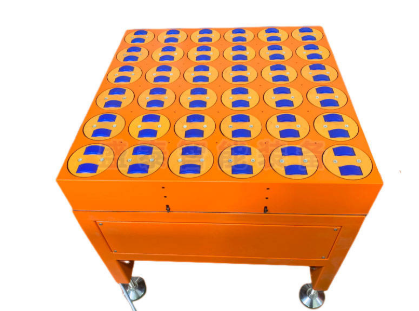
Figure 1. A modular sortation line built around low-power transport and zone-controlled drives.
For two decades, warehouse automation was justified almost entirely on labor savings and order accuracy. That calculus is changing. In many regions, electricity now represents the fastest-rising line item in a fulfillment center's operating budget, and grid carbon intensity is being scrutinized by both regulators and downstream customers. A high-throughput cross-belt or swivel-wheel sorter that runs 20 hours a day can consume as much energy as a small office building. The 2026 generation of equipment is being engineered to cut that draw without sacrificing the throughput that justified the investment in the first place.
The most visible shift is the move from always-on mechanical transport to on-demand, zone-controlled transport. Instead of a full belt running continuously, modern controllers energize only the segments where a parcel is present. Combined with regenerative braking on deceleration zones, this alone can reduce transport energy by 25 to 40 percent in mixed-flow operations.
Every time a diverted parcel is slowed or stopped at a takeaway, kinetic energy is normally dissipated as heat. Regenerative drive technology captures a portion of that energy and feeds it back to the common DC bus, where it is immediately reused by adjacent accelerating zones. In 2026, regenerative modules have become standard on mid- and high-tier sortation equipment rather than a premium option.

Figure 2. Regenerative drive architecture recovers braking energy into a shared DC bus.
| Technology | Typical Saving | Payback Period |
|---|---|---|
| Zone-controlled transport | 25-40% | < 18 months |
| Regenerative DC bus | 10-18% | 12-24 months |
| Permanent-magnet motors | 15-30% | 18-30 months |
| AI load balancing | 8-15% | 6-12 months |
Artificial intelligence has entered the sortation control room. Rather than running every line at a fixed speed, 2026 controllers use short-horizon demand forecasting to ramp zones up and down in response to real incoming volume. When inbound is light, the system throttles transport speed and pauses idle chutes. When a peak wave arrives, it pre-positions diverters and reroutes flow to avoid congestion that would otherwise force a full-speed recovery cycle. The result is a facility that sips power during the troughs and only spends heavily when the business actually demands it.
Beyond energy, AI load balancing improves equipment life. Smooth acceleration profiles reduce mechanical stress on belts, wheels, and bearings, lowering maintenance frequency and extending the replacement cycle. For operators, that is a second, quieter win: fewer spare parts, less unplanned downtime, and a smaller maintenance carbon footprint.
Sustainability is not only about watts. It is also about how much steel, aluminum, and electronics end up in a landfill when a hub is reconfigured. The 2026 trend toward modular sortation units means a line can be extended, rebalanced, or relocated without scrapping the original investment. Swivel-wheel modules, narrow-belt segments, and cross-belt carts are increasingly designed as field-replaceable blocks with standardized mounts.

Figure 3. Field-replaceable modular sorter units support reconfiguration without full teardown.
This modularity dovetails with the circular-economy expectations now written into many large retailers' supplier codes of conduct. A hub that can grow with volume, rather than being demolished and rebuilt every three years, is both cheaper and demonstrably greener.
The demand for green sortation is not uniform. It is concentrated in segments where energy cost and brand accountability intersect:
For operators specifying new sortation in 2026, several criteria have risen in priority. First, ask for a documented energy-per-parcel figure, not just rated motor power. Second, confirm that zone control and regenerative braking are native to the controller, not bolt-on retrofits. Third, evaluate the modularity roadmap: can the vendor extend the line with the same module family in two years? Fourth, request the maintenance interval data, because downtime and spare-part consumption are part of the true environmental cost.
Finally, treat software as infrastructure. An AI load-balancing layer that learns your flow pattern is the single highest-leverage, lowest-capital addition you can make to an existing line. Many 2026 retrofits pair a new controller with legacy mechanical transport and still capture double-digit percentage energy reductions.
Looking beyond 2026, the trajectory points toward auditable sustainability. Hubs are beginning to expose real-time energy-per-parcel dashboards to their customers, turning a hidden utility cost into a verifiable selling point. As carbon accounting becomes embedded in logistics contracts, the sortation line that can prove its efficiency will win bids that a faster-but-thirstier competitor cannot.
Green sortation is therefore not a constraint on performance. Done well, it is a discipline that forces better engineering: lighter motion, smarter control, longer-lived hardware, and honest measurement. The 2026 generation of systems shows that the most sustainable hub is also, quite often, the most profitable one.
WINDA (Zowinda) designs and manufactures modular sortation and conveying equipment for logistics, e-commerce, and industrial automation. Our product range covers swivel-wheel sorters, narrow-belt sorters, cross-belt sorters, and PVK belt conveyors, all engineered for on-demand transport and regenerative efficiency. For specifications and project consultation, contact us at info@zowinda.com or reach our team via WhatsApp at +86 186 2085 0485.
Sorter
Wechat QR code
wechat number:Copyright © 2022-2023 Winda, inc. All rights reserved