

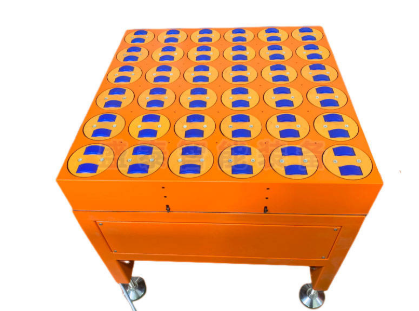
In 2026, the line between material handling and robotics is dissolving. Logistic hubs that once treated sorters and robots as separate layers of the operation are now fusing them into a single, self-coordinating system. This convergence is not a futuristic concept; it is a measurable shift already visible across e-commerce fulfillment, parcel networks, and third-party logistics (3PL) campuses. The result is a warehouse that sorts faster, recovers from faults in seconds, and scales capacity without proportionally scaling headcount.
Three forces are pushing sortation and robotics onto the same control plane. First, order profiles have fragmented: the average e-commerce parcel is smaller, more varied, and expected sooner. Batch processing no longer fits. Second, labor availability remains tight across mature logistics markets, so any design that removes a manual touch-point earns a fast payback. Third, the cost of compute and machine vision has fallen far enough that a sorter controller can now run real-time inference at the edge. Together these forces reward systems that treat the sorter, the mobile robot, and the vision subsystem as one fleet rather than three vendors.
The most visible form of convergence is the handshake between Autonomous Mobile Robots (AMRs) and high-throughput sortation. Instead of goods traveling on fixed conveyor paths alone, AMRs ferry totes and cages to induction points, where a cross-belt or swivel-wheel sorter takes over for the long-haul sort. The two layers share a common traffic map. When a sorter lane reports congestion, the fleet manager reroutes robots to a secondary induction station. When a robot battery runs low, the sorter temporarily buffers that stream. The outcome is resilience: a single failure no longer cascades across the entire facility.
| Parameter | Reference Value (2026) |
|---|---|
| Peak sort rate | 8,000 - 21,000 items per hour (PPH) by sorter class |
| Sort accuracy | 99.9% with vision-assisted barcode and dimension capture |
| Robot fleet size | 20 - 200 AMRs per converged zone, dynamically balanced |
| End-to-end latency | < 90 seconds from induction to chute for standard parcels |
| Fault isolation | Single robot or lane failure contained in under 5 seconds |
| Energy draw | Regenerative drives recover 15% - 25% of braking energy |
| Control protocol | Shared fleet map over MQTT / OPC-UA with edge inference |
Vision is the glue. A converged node uses the same camera feeds for dimensioning, barcode reading, damage detection, and robot pick confirmation. Rather than dedicating a camera to one task, 2026 systems run a shared inference pipeline where multiple models consume the same frame. This reduces hardware duplication and, crucially, lets the sorter and the robot agree on what an item is before either acts on it. When vision and motion share state, mis-sorts drop and exception handling becomes a software decision instead of a manual intervention.
E-commerce fulfillment was the early adopter, but the pattern is spreading. Parcel carriers use converged nodes to absorb peak-season volume without leasing additional square footage. Pharmaceutical distribution benefits from the audit trail that a unified system naturally produces. Grocery and cold-chain operators value the reduced human presence in temperature-controlled zones. Even reverse logistics and returns processing, historically a manual bottleneck, are being absorbed by robotic induction paired with adaptive sort logic.
Analyst consensus points to continued double-digit growth in deployed converged nodes through 2026, with the strongest momentum in Asia-Pacific and North America. The differentiator is shifting from hardware throughput to software orchestration. Vendors that expose clean APIs and predictable integration costs are winning pilots, while closed, proprietary stacks are being excluded from multi-vendorrfleet strategies. Buyers are increasingly evaluating total cost per sorted item rather than capital cost per machine.
For operators weighing an investment, the practical checklist is straightforward. Demand a shared control plane rather than bolt-on integration. Ask how the system behaves when one robot or one sorter lane fails. Verify that vision models can be updated without stopping the line. Require an open data export so the node feeds your warehouse management system instead of hiding inside a silo. Finally, size for peak plus a margin; converged nodes pay back fastest when they remove the need for seasonal overflow labor.
WINDA (Shenzhen Zhongweida Technology Co., Ltd.) designs and integrates sortation and material-handling systems for logistics operators worldwide. To discuss a converged sortation assessment for your facility, contact our engineering team at info@zowinda.com or reach us on WhatsApp at +86 186 2085 0485.
Sorter
Wechat QR code
wechat number:Copyright © 2022-2023 Winda, inc. All rights reserved