

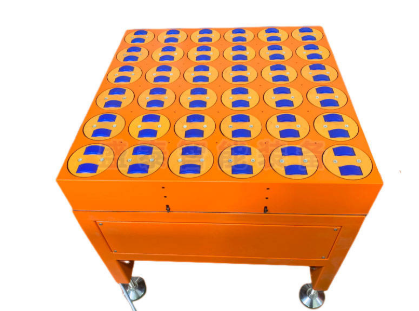
Modular sortation hardware is now driven by software agents that negotiate tasks in real time.
For most of the last decade, warehouse automation meant islands of automation: a fleet of autonomous mobile robots here, a cross-belt sorter there, a handful of robotic arms at the pack station. Each system ran its own controller, spoke its own protocol, and reported to a separate dashboard. In 2026, that fragmentation is collapsing. The defining shift is not a new motor or a faster scanner — it is multi-agent orchestration software that treats every robot, sorter, conveyor, and workstation as a cooperative agent under one brain.
This article examines why 2026 is the inflection year for multi-agent warehouse control, how the architecture actually works, what technical specifications matter, where it is being deployed, and what the market trajectory looks like for the next 24 months.
Three forces converged in 2026 to make multi-agent orchestration practical rather than theoretical:
The result is a control plane where a sortation decision is no longer made by one fixed program but emerges from negotiation among agents that each understand a slice of the operation.

A single orchestration layer coordinates mobile robots, wheel sorters, and conveyors as peer agents.
The architecture has four layers, each with a clear job:
Critically, the coordinator is not a single point of failure in well-designed deployments. If the coordinator agent drops, neighboring agents fall back to a last-known-good policy and the system keeps moving at reduced throughput instead of freezing entirely.
When evaluating an orchestration platform this year, these specifications separate production-grade systems from demos:
| Specification | Production threshold (2026) | Why it matters |
|---|---|---|
| Task re-plan latency | < 200 ms per negotiation round | Keeps high-speed sorters from stalling at diverters |
| Agent fleet size supported | 500+ concurrent agents | Covers a mid-size hub with mixed robot types |
| Failure containment | Local degraded mode on coordinator loss | Avoids full-site stop on a software blip |
| Protocol support | MQTT, OPC-UA, REST, vendor SDK | Integrates legacy conveyors and new AMRs |
| Digital-twin sync | Sub-second state mirror | Enables what-if simulation before live changes |
| Throughput accuracy | 99.9% sort accuracy at line speed | Non-negotiable for retail and parcel SLAs |

Multi-agent orchestration is not limited to greenfield megahubs. The scenarios below are live in 2026:
Several measurable trends are shaping procurement in 2026 and into 2027:
If you are specifying a sortation upgrade this year, use this short checklist:
WINDA builds modular sortation hardware — swivel wheel sorters, narrow-belt diverters, and cross-belt units — designed from the ground up to expose machine-level capability to external orchestration agents. Each unit publishes its real-time state over standard telemetry, so it drops into a multi-agent fleet without a custom gateway. For operators planning a 2026 control-plane upgrade, WINDA hardware is built to be commanded, not just controlled.
To discuss a multi-agent sortation pilot or request the 2026 integration specification, contact the WINDA team at info@wdsort.com. Our engineering group helps map existing conveyor and robot assets into a cooperative agent fabric and runs a digital-twin rehearsal before any production change.
Published: 2026-08-25 14:00:00 | Category: Industry News | Topics: multi-agent robotics, warehouse orchestration, sortation software.
Sorter
Wechat QR code
wechat number:Copyright © 2022-2023 Winda, inc. All rights reserved