

As e-commerce order profiles fragment and same-day delivery windows tighten, the race in 2026 is no longer only about parcel throughput. It is about throughput per square meter. Urban fulfillment centers, micro-fulfillment nodes, and back-of-store sortation rooms are asking the same question: How do we sort more parcels in less real estate without sacrificing accuracy, maintainability, or operator safety? The answer emerging across Asia, Europe, and North America is a new generation of high-density parcel sortation systems.
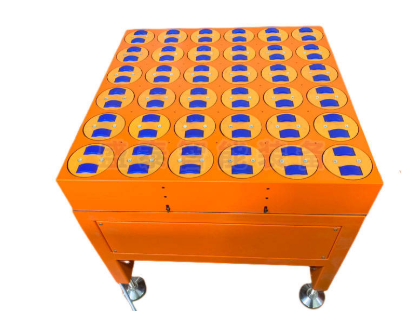
For most of the 2010s, warehouse design prioritized flow. Facilities were built on the urban fringe where land was cheap, and sorters could sprawl horizontally. The COVID-era e-commerce surge changed volume expectations, but the post-2024 landscape changed location economics. Labor shortages, last-mile cost inflation, and consumer demand for faster delivery have pushed inventory closer to cities.
City logistics real estate now trades at a significant premium. A mezzanine-ready sorter that once needed 600 square meters must now fit into 250 square meters or less. That constraint is forcing three parallel innovations:
High-density sortation is not simply a scaled-down version of a hub sorter. Each subsystem must be re-optimized for proximity, vibration, and accessibility. The following table summarizes the key technical attributes that define 2026 compact sorter platforms.
| Subsystem | High-Density Requirement | 2026 State of the Art |
|---|---|---|
| Induction | Minimal feed conveyor length, high pick density | Two-to-four-station parallel induction with wave-release gapping |
| Carrier / tray | Small pitch, low weight, low noise | Plastic composite trays with integrated RFID tags |
| Drive | Smooth acceleration in tight curves | Linear motor or drum-motor belt loops with regenerative braking |
| Divert | Fast, accurate, close-spaced exits | Swivel-wheel or narrow-belt diverts with sub-500 mm pitch |
| Chutes | Maximize destinations per wall | Vertically tiered slide chutes and tote-present buffers |
| Control | Real-time routing and collision avoidance | PLC + edge controller with WCS integration |
A well-integrated compact sorter in 2026 can achieve destination counts previously associated with much larger loop sorters. The crucial metric is no longer destinations per meter of track, but destinations per cubic meter of installed volume.
High-density sortation is finding adoption wherever space is expensive and parcel variety is high. The leading applications in 2026 include:
Micro-fulfillment centers located inside city rings often occupy retrofitted retail or industrial basements. Compact sorters allow operators to sort inbound parcels by route, outbound orders by customer, and returns by SKU category within the same footprint.
Big-box retailers are converting portions of existing stores into local fulfillment nodes. A compact sorter behind the stockroom can pre-sort click-and-collect orders and last-mile route bags without expanding the building envelope.
Temperature-controlled space is the most expensive warehouse real estate of all. Compact sortation reduces the cubic volume that must be chilled, while maintaining lot-level traceability through carrier RFID and barcode verification.
Returns processing is labor-intensive and seasonal. Compact sorters let apparel brands install seasonal return centers in temporary urban spaces, scaling capacity up or down with modular additions.
Not every compact sorter is suitable for every operation. Buyers in 2026 should evaluate four dimensions before selecting a platform:
The next phase of compact sortation will likely blend physical density with cognitive density. Machine-vision parcel characterization, predictive divert timing, and self-commissioning chute maps will allow sorters to reconfigure themselves for promotional peaks without manual retooling.
We also expect further convergence between robotic induction arms and compact sorters. As induction becomes autonomous, the footprint advantage of high-density sortation compounds, because the same small cell can receive, singulate, and sort with minimal human interaction.
WDSort designs and manufactures modular sortation equipment engineered for high-throughput, space-constrained logistics environments. From narrow-belt linear sorters to compact swivel-wheel units, WDSort platforms are built with standardized frames, quick-change divert modules, and PLC-based controls that integrate cleanly with existing warehouse software.
For operations planning urban fulfillment expansions or retrofitting existing sites, WDSort provides layout consulting, throughput modeling, and after-sales spare-parts support to keep compact sorters running at design capacity.
Contact WDSort to discuss your high-density sortation requirements. Email info@wdsort.com or call +86 186 2085 0485 for technical consultation and project planning.
Sorter
Wechat QR code
wechat number:Copyright © 2022-2023 Winda, inc. All rights reserved